
Table of Contents
I. Why are my beetroot leaves turning yellow?
Beetroot is a hardy and versatile vegetable that thrives in well-maintained soil and proper growing conditions. However, yellowing beetroot leaves are a common issue faced by gardeners. This problem not only affects the appearance of the plant but can also indicate underlying issues that may affect its overall health and growth.
Understanding the cause of yellowing beetroot leaves is crucial for providing the correct care. Identifying the problem early allows gardeners to take timely corrective actions to ensure the health of their plants and maximize their harvest.
II. Common Causes of Yellowing Beetroot Leaves
A. Nutrient Deficiencies
- Nitrogen Deficiency
- Symptoms: The yellowing of older leaves, starting at the bottom of the plant and progressing upward.
- Cause: Nitrogen is a vital nutrient for plants, and its deficiency often results from poor soil quality or insufficient fertilization. Nitrogen helps with chlorophyll production, which is essential for photosynthesis.
- Solution: Adding nitrogen-rich compost, well-rotted manure, or a balanced fertilizer can restore nutrient levels in the soil. It’s crucial to avoid over-fertilization, which can harm the plant. A slow-release fertilizer is ideal for maintaining steady nutrient levels.
- Symptoms: The yellowing of older leaves, starting at the bottom of the plant and progressing upward.
- Iron Deficiency
- Symptoms: Yellowing between leaf veins (interveinal chlorosis), while veins remain green. This symptom often appears first in the younger leaves.
- Cause: Iron deficiency can be caused by alkaline soil (high pH), poor drainage, or compacted soil, which limits iron availability to the plant.
- Solution: To correct iron deficiency, gardeners can apply iron chelate or sulfur to acidify the soil. Additionally, adjusting the pH of the soil to a more neutral or slightly acidic level (around 6–7 pH) can help improve iron uptake.
- Symptoms: Yellowing between leaf veins (interveinal chlorosis), while veins remain green. This symptom often appears first in the younger leaves.
- Magnesium Deficiency
- Symptoms: Yellowing that starts at the edges of older leaves and gradually spreads inward.
- Cause: Magnesium is a crucial nutrient that supports photosynthesis and enzyme functions. Deficiency is commonly caused by soil that lacks sufficient magnesium or an imbalanced soil nutrient profile.
- Solution: Epsom salts, which contain magnesium sulfate, can be applied to the soil. Alternatively, using a magnesium-rich fertilizer or dolomitic lime can help correct the deficiency.
- Symptoms: Yellowing that starts at the edges of older leaves and gradually spreads inward.
B. Overwatering or Poor Drainage
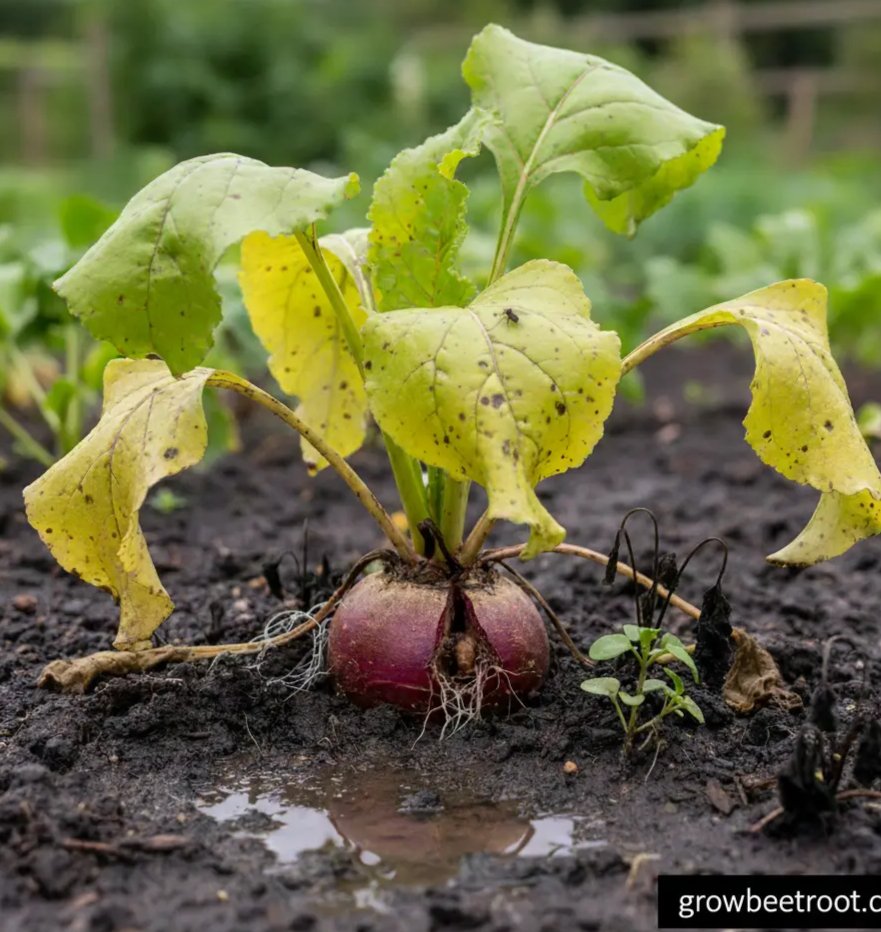
- Symptoms: Yellowing leaves that may also show signs of wilting, despite the soil being wet.
- Cause: Overwatering leads to waterlogged soil, depriving the plant roots of necessary oxygen. This stress impairs root function and nutrient uptake, often causing yellowing leaves.
- Solution: To address overwatering, improve soil drainage by adding organic matter or sand. Ensure that plants are grown in well-draining beds or containers, and reduce watering frequency. Beets prefer consistent but not excessive moisture.
C. Underwatering
- Symptoms: Yellowing leaves, curling, and crispy edges, especially in the lower leaves.
- Cause: Infrequent or insufficient watering causes the plant to become stressed, resulting in nutrient deficiencies and poor growth.
- Solution: Beets thrive in consistently moist soil, so regular watering is essential. However, be careful not to let the soil become waterlogged. Mulching around the plants can help maintain soil moisture and prevent drought stress.
D. Pests or Diseases
- Aphids or Leafhoppers
- Symptoms: Yellow spots, distorted leaves, and curled foliage.
- Cause: Aphids and leafhoppers are common beet pests that suck sap from the plant, causing damage that results in yellowing and leaf distortion.
- Solution: Treat infestations with organic insecticides, such as neem oil or insecticidal soap. A strong blast of water from a hose can also dislodge pests.
- Symptoms: Yellow spots, distorted leaves, and curled foliage.
- Root Rot (Fungal or Bacterial)
- Symptoms: Yellowing leaves, wilting, and foul-smelling soil.
- Cause: Root rot is typically caused by overwatering or poor soil drainage. Pathogenic fungi or bacteria attack the plant’s roots, preventing them from absorbing water and nutrients properly.
- Solution: Remove affected plants and improve drainage. Allow the soil to dry out between watering to prevent future occurrences of root rot.
- Symptoms: Yellowing leaves, wilting, and foul-smelling soil.
E. Environmental Stress
- Temperature Stress
- Symptoms: Yellow leaves, often appearing suddenly during periods of extreme heat or cold.
- Cause: Sudden temperature fluctuations or extended periods of extreme weather can stress beetroot plants, resulting in yellowing leaves.
- Solution: Provide shade during intense heat or use row covers to protect plants from cold snaps. Grow beets in regions with moderate temperatures or during the correct seasonal window.
- Symptoms: Yellow leaves, often appearing suddenly during periods of extreme heat or cold.
- Transplant Shock
- Symptoms: Sudden yellowing of leaves after transplanting.
- Cause: Transplanting causes physical disturbance to the plant’s roots, which can result in shock and subsequent yellowing of the leaves.
- Solution: Minimize root disturbance by transplanting seedlings with care. If possible, start beetroot seeds directly in the ground to avoid transplant shock.
- Symptoms: Sudden yellowing of leaves after transplanting.
F. Aging or Natural Growth Cycle
- Symptoms: Yellowing of older leaves as the plant matures.
- Cause: As beetroots mature, the older leaves naturally die off and turn yellow. This is a normal part of the plant’s growth cycle.
- Solution: This is not a problem that requires intervention. Simply allow the plant to continue growing, and harvest the mature beetroot when they are ready.
III. Diagnosis and Prevention
A. How to Diagnose the Cause
- Examine Soil Condition and pH: Check the soil’s pH and nutrient levels to identify potential deficiencies. Soil testing kits are available to measure nutrient content and pH.
- Inspect Watering Practices: Review your watering schedule and adjust based on the weather and soil moisture levels. Beets prefer moist but well-drained soil.
- Check for Pests and Diseases: Inspect the leaves and roots for signs of pests (such as aphids) or diseases (such as root rot). Early detection is key for managing pest issues.
B. Prevention Tips
- Regular Soil Testing and Amendments: Conduct regular soil tests to ensure your beetroots have the necessary nutrients for growth. Amend the soil with organic compost or fertilizers as needed.
- Proper Watering Techniques: Maintain consistent watering schedules and ensure good drainage to prevent overwatering or underwatering.
- Timely Pest Control and Disease Management: Monitor your beetroot plants for pests or diseases regularly. Apply treatments such as neem oil or insecticidal soap at the first sign of an infestation.
IV. Conclusion
Yellowing beetroot leaves are often a symptom of a variety of issues, ranging from nutrient deficiencies to pests, diseases, or environmental stress.
By understanding and diagnosing the root cause, gardeners can take proactive measures to ensure healthy growth and maximize their harvest. Regular soil testing, proper watering techniques, and pest management will help maintain robust beetroot plants and prevent yellowing leaves from affecting your crop.
Remember, not all yellowing is a sign of distress—sometimes, older leaves naturally yellow as the plant matures. In such cases, allow the plant to continue its growth cycle and harvest the beets once they are ready.
Read our article about storing beetroot