
Table of Contents
Importance of how to store beetroot UK in winter
The UK’s temperate maritime climate poses specific challenges when it comes to vegetable storage, especially for root vegetables like beetroot. Beetroot is a hardy vegetable that thrives in the UK’s relatively mild winters, but ensuring it lasts through the colder months requires careful attention to storage conditions.
Whether you’re harvesting your own beetroot from the garden or buying it in bulk from the supermarket, proper storage techniques can significantly extend its shelf life, preserve its flavor, and maintain its nutritional value.
Beetroot is a versatile vegetable that can be enjoyed throughout the year, especially during winter when fresh produce can be more limited. However, without the right storage methods, beetroot can quickly spoil due to excess moisture, humidity, or freezing temperatures.
Understanding the UK Climate for Beetroot Storage
UK Climate Overview
The UK’s climate, characterized by its mild temperatures and relatively high humidity, has a significant impact on how vegetables, including beetroot, are stored. Winter temperatures typically range from 2°C to 7°C, ( (35-45°F) with the chance of occasional frost or snow, but extreme cold is uncommon.
This temperate maritime climate means there is often more rainfall and moisture than ideal for vegetable storage. Moisture can lead to rot and mold, especially in the winter months, making moisture control a key component of successful beetroot storage.
Challenges for Storing Beetroot in Winter
- Cold temperatures, but not extreme frost-resistant: While beetroot can tolerate light frosts, the extreme cold can cause damage to the root, making it less suitable for storage.
- Dampness and humidity: The UK’s winter weather increases humidity levels, which can promote mold growth and decay in stored vegetables.
- Lack of proper winter storage in smaller homes or urban environments: Many homes, especially in urban areas, lack the ideal storage spaces like basements or root cellars. This makes it harder to store beetroot for longer periods.
How to Store Beetroot for Winter in the UK
1. Harvesting Beetroot for Winter Storage
Timing the Harvest: The best time to harvest beetroot in the UK for winter storage is usually in late autumn, typically from September to October, before the frost sets in. Harvesting at this time ensures that the beetroot has reached full maturity without the risk of freezing.
Preparing for Storage: When harvesting beetroot, handle them with care to avoid bruising, as this can lead to faster spoilage. Leave about 1-2 inches of the stem attached to the root. Cutting too close to the root can cause moisture loss, leading to wilting and spoilage. Gently shake off excess soil, but don’t wash them until ready to use, as moisture can promote mold growth.
2. How to Store Beetroot in the UK for Winter
Drying the Beetroot (Hardening Off):
Before long-term storage, a short drying period is essential. This allows the skin to toughen and any minor wounds to seal, preventing rot.
- How to Dry Beetroot: Gently brush off soil and leave the roots unwashed. Lay them in a single layer in a well-ventilated, dry, and cool place (like a garden shed) for 1 to 2 days. This allows surface moisture to evaporate.
Ideal Long-Term Storage Locations and Method for Beetroot:
- Conditions: The ideal environment is dark with a consistent temperature of 0°C to 4°C and very high humidity (90-95%). A root cellar is perfect. A cold, frost-free garage or shed can work if the correct method is used.
- Storage Method: To create the necessary humid microclimate, pack the dried beetroots in a box, separated by layers of slightly damp horticultural sand, peat-free compost, or sawdust. Ensure the beetroots do not touch each other. This method prevents them from drying out and rotting.
- Why this works: The damp packing material maintains the high humidity around the beetroot, which is essential for preventing moisture loss and keeping them firm for months. Simply placing them in a box in a cold shed without this humid packing will cause them to shrivel.
Ideal Storage Locations for Beetroot:
- Root Cellars or Cool, Dark Locations: Root cellars are perfect for winter storage, with their consistently cool temperatures (between 0°C to 5°C) and low light levels. These conditions help beetroot last longer without freezing or spoiling.
- Outdoor Storage Options: If you don’t have access to a root cellar, a garden shed, garage, or cool basement can work, provided temperatures are kept stable between 0°C and 5°C. However, avoid storing near heat sources such as radiators or heaters, as warmth can cause the beetroot to sprout prematurely or soften.
3. Methods for Storing Beetroot in Sand or Sawdust
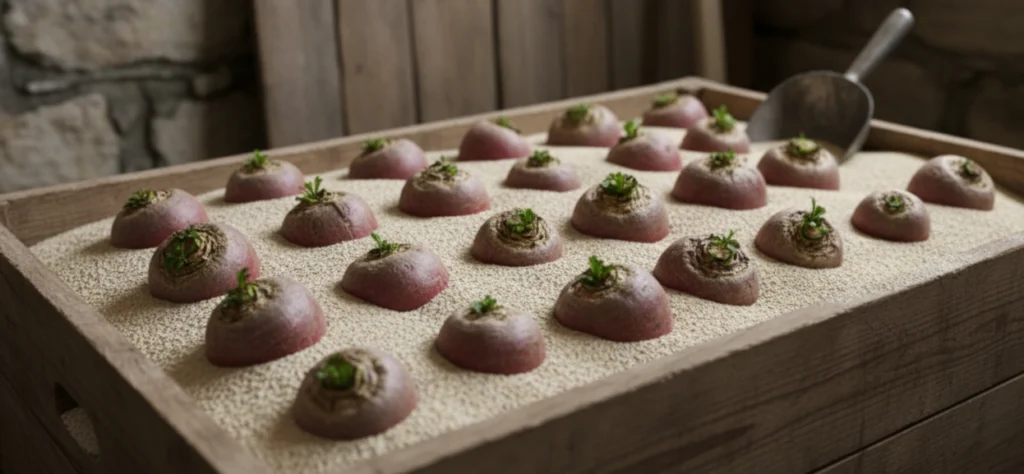
One of the most effective methods for storing beetroot over the winter is using sand or sawdust. This method helps maintain an optimal environment for the roots, keeping them cool, dry, and well-ventilated.
- Using Sand or Sawdust: Prepare a large container or wooden crate and fill it with either sand or sawdust. These materials help to absorb excess moisture and prevent the roots from touching each other, reducing the risk of rot.
- How to Layer Beetroot in the Bin: Lay the beetroot in the sand or sawdust, ensuring that they are not touching each other. Cover them completely with a layer of sand or sawdust. This layer acts as a natural insulator, ensuring that the beetroot stays cool but not frozen.
4. Beetroot Storage in Containers
Another simple method is using plastic or wooden crates for storage. Both types of containers allow for ventilation, which helps reduce the chance of mold and mildew.
- Using Plastic or Wooden Crates: These containers should have adequate ventilation holes to ensure proper airflow. Place the beetroot in layers, and ensure that the crates are stored in a cool, dark area to prevent light from causing sprouting.
- Why Ventilation is Key: Ventilation helps maintain the balance of moisture in the air, preventing beetroot from becoming overly damp or dry. Without proper ventilation, the beets are more likely to develop mold or rot.
Moisture Control in Winter Beetroot Storage
Excess moisture is one of the main reasons beetroot spoils during storage, especially in the humid UK winter climate. Moisture can lead to mold, decay, and a loss of texture, making it important to manage humidity levels in your storage area.
Methods to Control Moisture Levels
- Ventilated Storage: Ensure there is adequate airflow in your storage area to help regulate humidity levels. Using perforated bags or containers with ventilation holes helps to maintain proper moisture levels.
- Absorbent Materials: Use sand, peat, or sawdust to absorb excess moisture. These materials not only help maintain the right moisture levels but also protect the beetroot from too much humidity.
- Regular Checks: Inspect stored beetroot every 2-3 weeks. Remove any beets showing signs of mold, softness, or decay to prevent it from spreading.
Avoid Storing Wet Beetroot
Ensure that the beetroot is dry before storing it. Wet beetroot can quickly become a breeding ground for mold and bacteria, reducing its shelf life significantly.
How to Store Beetroot in the Fridge (For Shorter-Term Storage)
If you’re storing beetroot for a shorter period, the fridge is an excellent option. Here’s how to store beetroot in the fridge:
Using the Fridge for Beetroot Storage:
- How Long Will Beetroot Last in the Fridge? Beetroot can stay fresh in the fridge for up to 1 to 2 weeks.
- Fridge Storage Tips: Trim the greens, place the beetroot in perforated plastic bags, and store them in the vegetable drawer. This ensures that the beetroot stays fresh and doesn’t lose moisture too quickly.
Alternative Storage Methods for Urban Environments in the UK
For those without access to a root cellar or garden shed, alternative storage options are available.
How to Store Beetroot in Small Spaces
- Using a Balcony: For apartment dwellers in areas with mild winter conditions, storing beetroot in an insulated box on a balcony is an option. Be sure to protect it from frost with materials like blankets or hay.
- Storing in a Cool Pantry or Cupboard: If you have a cool pantry, cupboard, or closet, make sure it’s well-ventilated and insulated to maintain a steady temperature above freezing.
Dealing with Common Winter Storage Issues
Preventing Freezing in Cold Areas
In colder areas of the UK, freezing can be a risk during winter. If beetroot freezes, it can become mushy and unappetizing.
- How to Insulate Beetroot: Use straw, hay, or blankets to insulate your beetroot in outdoor or unheated storage spaces. This will help protect it from freezing while still allowing it to remain cool.
Signs of Spoilage to Watch For
- Softness or Wrinkling: This indicates that the beetroot is losing moisture and might be starting to spoil.
- Mold or Foul Smell: If any beetroot shows signs of mold or starts to rot, remove it immediately to prevent it from affecting the rest.
How to Use Stored Beetroot Throughout the Winter
Stored beetroot can be used in a variety of ways throughout the winter. Here are a few ideas:
- Roasting: Roasting beetroot brings out its sweetness and enhances its flavor.
- Pickling: Pickling is a great way to preserve beetroot for even longer.
- Juices or Soups: Beetroot is an excellent base for juices and hearty soups.
To maximize the shelf life of stored beetroot, try to rotate your stock and consume older beetroot first.
Conclusion
Properly storing beetroot in the UK climate requires attention to temperature, humidity, and moisture control. Whether you have access to a root cellar, shed, or small space in an urban area, there are plenty of storage methods that can help you keep beetroot fresh for the winter months. With the right preparation and regular monitoring, you can enjoy beetroot well into the colder season.
read our more detailed content about storing beetroot